
 By Khushi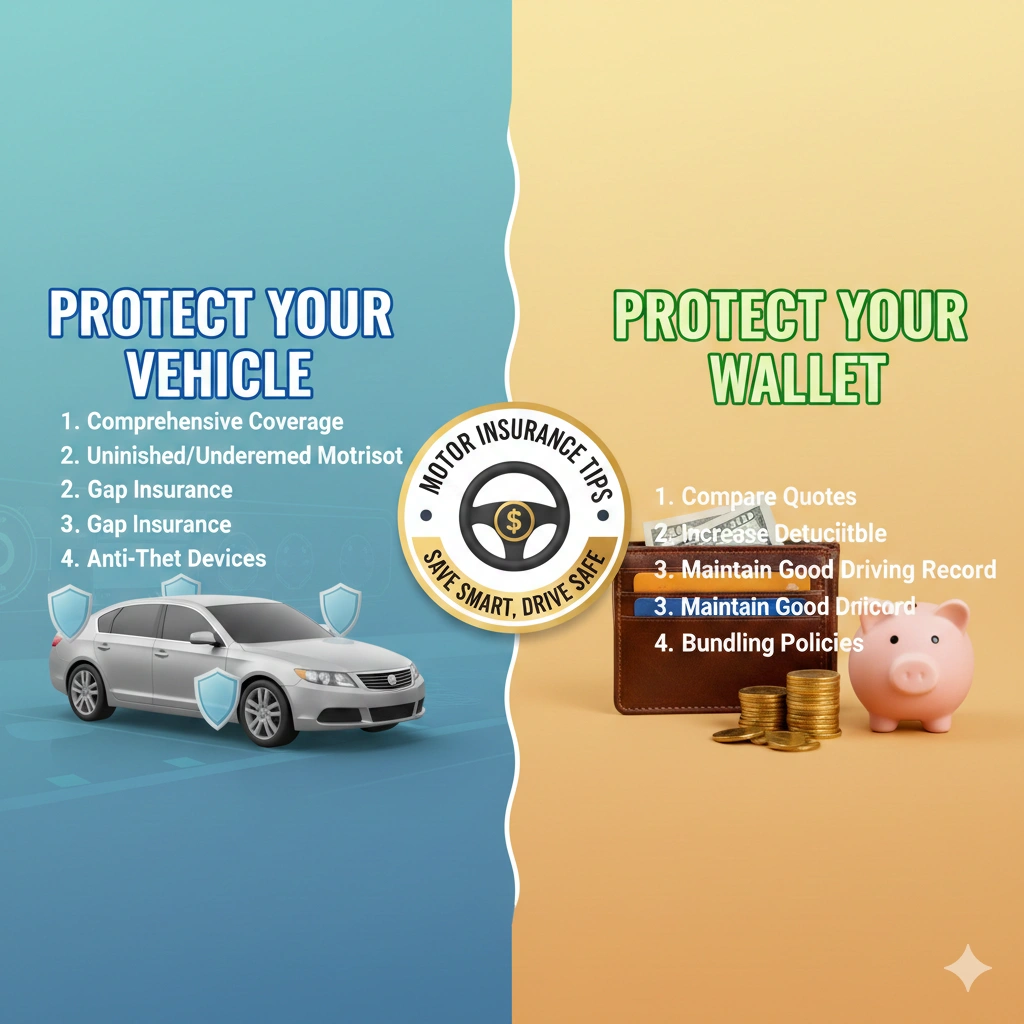
Introduction
Owning a vehicle—whether it’s a car, bike, or scooter—brings convenience, freedom, and pride. However, it also comes with responsibilities and risks. Accidents, theft, natural disasters, and unexpected repairs can put a serious dent in your finances if you are not adequately insured. This is where motor insurance plays a vital role.
Motor insurance is not just a legal requirement; it is a powerful financial tool that protects both your vehicle and your wallet. In this comprehensive guide, we’ll explore smart motor insurance tips that help you choose the right coverage, reduce premiums, handle claims smoothly, and maximize benefits—without compromising protection.
What Is Motor Insurance?
Motor insurance is a policy that provides financial protection against damages, losses, and liabilities arising from the use of motor vehicles. It covers cars, two-wheelers, and other motorized vehicles.
Depending on the policy type, motor insurance can cover:
- Damage to your own vehicle
- Third-party injuries or property damage
- Theft or total loss
- Natural and man-made disasters
- Personal accident benefits
Why Motor Insurance Is Essential
Motor insurance is mandatory in many countries, but its importance goes far beyond legal compliance.
Key Reasons You Need Motor Insurance
- Covers expensive repair or replacement costs
- Protects against third-party legal liabilities
- Provides financial security during accidents
- Safeguards against theft and disasters
- Offers peace of mind while driving or riding
Without proper motor insurance, even a minor accident can lead to major financial stress.
Understand the Types of Motor Insurance
Knowing your options is the first step to making a smart choice.
1. Third-Party Motor Insurance
This is the minimum insurance required by law.
Covers:
- Injury or death of a third party
- Damage to third-party property
Does Not Cover:
- Damage to your own vehicle
- Theft or natural disasters
Best For: Old vehicles or basic legal compliance.
2. Comprehensive Motor Insurance
This offers all-round protection and is the most recommended option.
Covers:
- Third-party liabilities
- Damage to your own vehicle
- Theft
- Fire
- Natural disasters (floods, earthquakes, storms)
- Man-made disasters (riots, vandalism)
Best For: New or high-value vehicles and daily users.
3. Standalone Own-Damage Insurance
This covers only your vehicle’s damage and must be combined with third-party insurance.
Best For: Vehicle owners who already have third-party cover.
Tip 1: Choose the Right Coverage for Your Vehicle
One of the biggest mistakes people make is over-insuring or under-insuring their vehicle.
Smart Coverage Tips
- Choose comprehensive insurance for new or expensive vehicles
- Opt for third-party cover only if the vehicle is old and rarely used
- Consider your daily usage and risk exposure
- Don’t skip coverage just to save a small amount
The right coverage protects your vehicle without unnecessary costs.
Tip 2: Understand IDV and Set It Correctly
Insured Declared Value (IDV) is the maximum amount your insurer will pay if your vehicle is stolen or completely damaged.
- Higher IDV = Higher premium
- Lower IDV = Lower claim payout
Smart IDV Tip
Select an IDV close to your vehicle’s market value to balance premium and claim benefits.
Tip 3: Use Add-Ons Wisely
Add-ons enhance coverage but also increase premium. Choose only what you need.
Useful Add-Ons to Consider
- Zero Depreciation Cover: Higher claim payout
- Engine Protection: Essential in flood-prone areas
- Roadside Assistance: Emergency breakdown support
- No Claim Bonus Protection: Saves discounts after a claim
- Personal Accident Cover: Financial protection for driver/owner
Avoid unnecessary add-ons that don’t match your driving habits.
Tip 4: Maintain a Claim-Free Record
No Claim Bonus (NCB) is a reward for safe driving.
NCB Benefits
- Increases every claim-free year
- Can offer up to 50% discount on premium
- Transferable when switching insurers
Wallet Protection Tip
Avoid small claims when possible to preserve your NCB and save more in the long run.
Tip 5: Compare Policies Before Buying or Renewing
Never buy or renew motor insurance without comparing plans.
What to Compare
- Coverage details
- Premium amount
- Add-ons offered
- Claim settlement reputation
- Network garages
Online comparison helps you find the best value for money.
Tip 6: Install Safety and Anti-Theft Devices
Safety measures not only protect your vehicle but also reduce premiums.
Examples
- Approved anti-theft devices
- GPS tracking systems
- Parking in secure locations
Insurers often reward responsible vehicle owners with discounts.
Tip 7: Renew Your Policy on Time
A lapsed policy can lead to higher premiums and loss of benefits.
Renewal Tips
- Renew before the expiry date
- Reassess coverage and add-ons
- Check eligibility for NCB
- Avoid inspection delays
Timely renewal keeps your coverage uninterrupted.
Tip 8: Understand the Claim Process in Advance
Knowing how claims work saves time and stress during emergencies.
Basic Claim Steps
- Inform the insurer immediately
- Document the damage
- Submit required documents
- Vehicle inspection by surveyor
- Repair approval and settlement
Understanding this process ensures faster and smoother claims.
Tip 9: Choose Cashless Repairs When Possible
Cashless claims reduce your out-of-pocket expenses.
Benefits of Cashless Claims
- Repairs at network garages
- Direct settlement by insurer
- Minimal paperwork
- Faster processing
Always check the insurer’s garage network in your area.
Tip 10: Avoid Common Mistakes That Lead to Claim Rejection
Mistakes to Avoid
- Driving without a valid license
- Delayed claim intimation
- Drunk or reckless driving
- Policy lapse
- False information
Being careful protects both your vehicle and your wallet.
How to Save Money on Motor Insurance Without Losing Coverage
Saving money doesn’t mean reducing protection.
Smart Savings Strategies
- Compare policies online
- Choose only essential add-ons
- Maintain NCB
- Opt for voluntary deductibles
- Install safety devices
Small decisions can lead to big savings over time.
Motor Insurance for Different Vehicle Owners
Car Owners
Focus on comprehensive coverage and zero depreciation add-ons.
Two-Wheeler Owners
Balance premium and coverage with essential add-ons.
New Vehicle Owners
Opt for full coverage during initial years.
Old Vehicle Owners
Reassess coverage and consider cost-effective options.
Digital Advantages of Motor Insurance
Modern motor insurance is faster and more convenient than ever.
Benefits of Online Motor Insurance
- Instant policy issuance
- Easy renewals
- Digital documentation
- Faster claims
- Transparent pricing
Technology has made protecting your vehicle easier and smarter.
Common Myths About Motor Insurance
Myth: Only new vehicles need insurance
Fact: Insurance is essential for all vehicles
Myth: Filing claims always increases premium
Fact: NCB and claim frequency matter
Myth: Cheaper policies are always better
Fact: Coverage quality matters more
Future of Motor Insurance
Motor insurance is evolving with innovation:
- Usage-based insurance
- Telematics-driven premiums
- AI-powered claim processing
- Faster digital settlements
These changes aim to make motor insurance more personalized and affordable.
Conclusion
Motor insurance is more than a legal requirement—it’s a smart financial shield. By understanding your policy, choosing the right coverage, using add-ons wisely, and following these motor insurance tips, you can effectively protect both your vehicle and your wallet.
A little planning today can save you from major expenses tomorrow. Drive responsibly, insure wisely, and enjoy peace of mind every time you hit the road.