
 By Khushi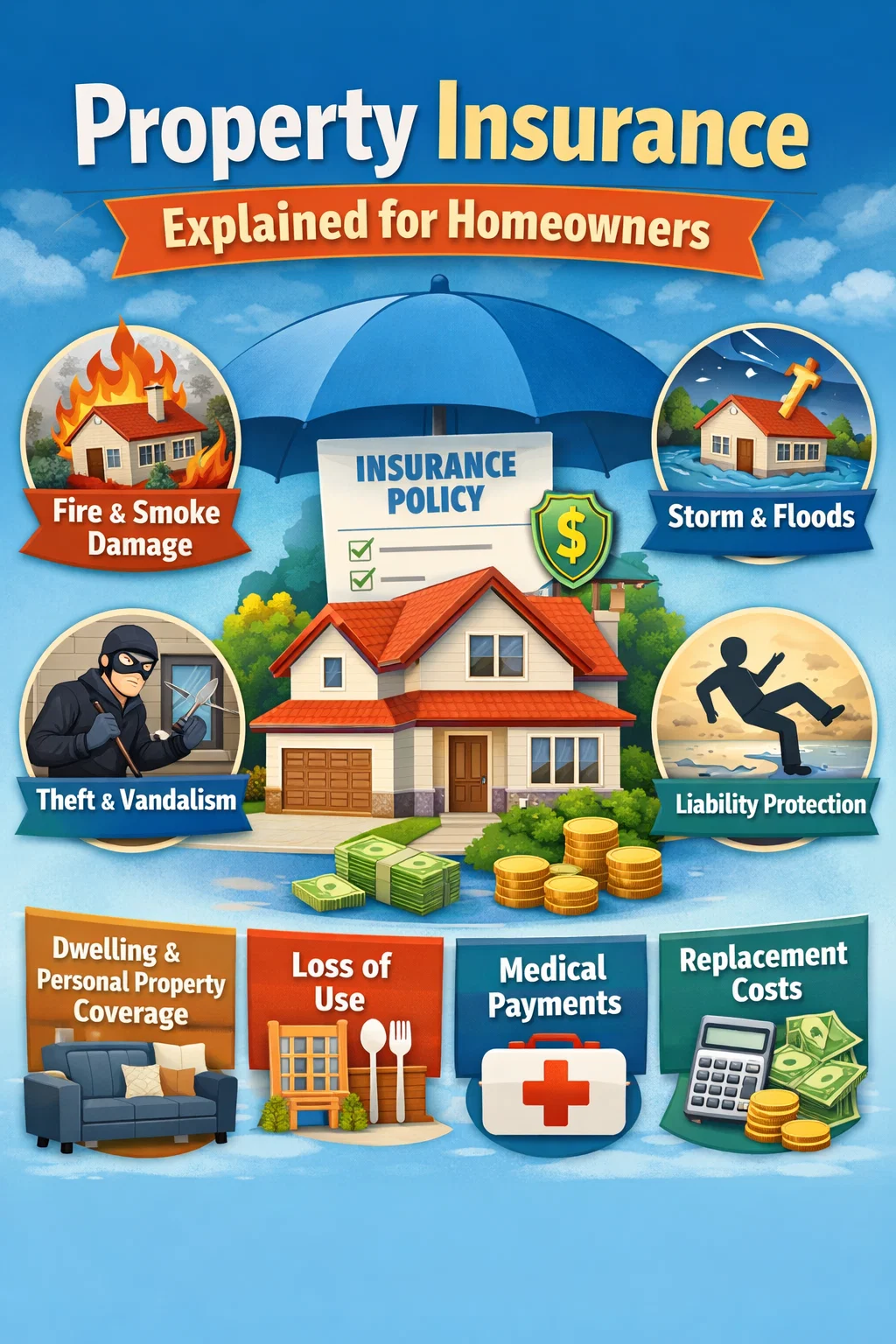
Introduction
Owning a home is one of the most significant milestones in life. It represents security, comfort, and years of hard work. However, along with ownership comes responsibility—especially the responsibility to protect your property from unexpected risks. Fires, natural disasters, theft, accidents, and structural damage can occur without warning and lead to substantial financial loss. This is where property insurance becomes essential.
Property insurance is designed to protect homeowners from financial hardship by covering damage or loss to their property and belongings. This detailed guide explains property insurance in simple terms, helping homeowners understand coverage, benefits, policy types, and how to choose the right protection for their needs.
What Is Property Insurance?
Property insurance is a type of insurance that provides financial compensation for damage or loss to residential or commercial property due to covered risks. For homeowners, it typically covers the physical structure of the home, personal belongings inside it, and liability arising from accidents on the property.
In exchange for regular premium payments, the insurer agrees to compensate the homeowner when unexpected damage or loss occurs, ensuring financial stability during difficult times.
Why Property Insurance Is Important for Homeowners
Many homeowners underestimate the risks associated with property ownership. Even minor damage can lead to major repair costs.
Key Reasons Property Insurance Is Essential
- Protects against costly repairs
- Safeguards personal belongings
- Covers losses from natural disasters
- Provides liability protection
- Preserves long-term investments
Property insurance turns unpredictable risks into manageable outcomes.
Common Risks Faced by Homeowners
Homes are exposed to various threats, both natural and man-made.
Major Property Risks
- Fire and explosions
- Floods, storms, and earthquakes
- Theft and burglary
- Electrical and plumbing failures
- Accidental damage
Property insurance ensures these risks do not become financial disasters.
What Does Property Insurance Cover?
Coverage can vary by policy, but most homeowner property insurance includes several key components.
Building or Structure Coverage
This covers the physical structure of the home.
What’s Included
- Walls, floors, and roof
- Doors, windows, and ceilings
- Fixed installations
- Garages and boundary walls
This coverage ensures your home can be repaired or rebuilt after damage.
Contents Coverage
Contents insurance protects the belongings inside your home.
Covered Items
- Furniture and appliances
- Electronics and home gadgets
- Clothing and personal items
- Kitchen equipment
This helps replace stolen or damaged items.
Liability Coverage
Liability protection covers legal and medical expenses if someone is injured on your property.
Why It Matters
- Covers legal costs
- Pays compensation claims
- Protects personal savings
Liability coverage is a crucial yet often overlooked benefit.
Loss of Use or Additional Living Expenses
If your home becomes uninhabitable due to damage, this coverage helps pay for temporary accommodation and related expenses.
Types of Property Insurance Policies
Different policies cater to different homeowner needs.
Basic Property Insurance
- Limited coverage
- Lower premiums
- Covers specified risks
Suitable for minimal protection needs.
Comprehensive Property Insurance
- Covers a wide range of risks
- Includes structure, contents, and liability
- Ideal for full protection
Recommended for most homeowners.
Named Peril vs All-Risk Policies
- Named Peril: Covers only listed risks
- All-Risk: Covers all risks except exclusions
Understanding this distinction helps avoid claim surprises.
Property Insurance for Home Loans
Most lenders require property insurance as a loan condition.
Benefits for Homeowners
- Protects lender’s collateral
- Ensures loan repayment security
- Prevents financial strain after damage
Insurance keeps both the homeowner and lender protected.
How Much Property Insurance Coverage Do You Need?
Adequate coverage is critical for full protection.
Factors to Consider
- Rebuilding cost of the property
- Value of household contents
- Location-based risk exposure
- Inflation and construction costs
Underinsurance can lead to partial claim settlements.
How Property Insurance Premiums Are Calculated
Premiums depend on several factors.
Key Influencers
- Property location
- Construction type
- Coverage amount
- Safety features
- Claim history
Understanding these helps you manage costs effectively.
Ways to Reduce Property Insurance Premiums
You can lower premiums without sacrificing protection.
Cost-Saving Tips
- Install safety systems
- Choose appropriate deductibles
- Avoid over-insurance
- Maintain property condition
Smart planning keeps insurance affordable.
Common Exclusions in Property Insurance
Not all damages are covered automatically.
Typical Exclusions
- Wear and tear
- Poor maintenance
- Intentional damage
- Certain disasters (unless added)
Reading policy terms carefully is essential.
How to File a Property Insurance Claim
A smooth claims process is crucial during stressful situations.
Claim Process
- Inform insurer promptly
- Document damage with photos
- Submit claim documents
- Cooperate with surveyor
Quick reporting speeds up settlement.
Importance of Accurate Property Valuation
Correct valuation ensures fair compensation.
Best Practices
- Update property value regularly
- Maintain inventory of belongings
- Keep receipts and documents
Accuracy prevents claim disputes.
Reviewing and Updating Property Insurance
Property value and risks change over time.
Review Policy When
- Renovations or upgrades are done
- New valuables are purchased
- Property value increases
Regular reviews keep coverage relevant.
Property Insurance and Peace of Mind
Beyond finances, insurance offers emotional comfort.
Knowing your home is protected helps you:
- Sleep peacefully
- Focus on family
- Handle emergencies confidently
Peace of mind is one of the greatest benefits.
Myths About Property Insurance
Myth 1: Property Insurance Is Too Expensive
Reality: Premiums are minimal compared to potential losses.
Myth 2: My Home Is Low Risk
Reality: Accidents can happen anywhere.
Myth 3: Savings Are Enough
Reality: Repairs can exceed savings quickly.
Technology and Property Insurance
Modern insurance has become more accessible.
Digital Benefits
- Online policy management
- Faster claim processing
- Transparent policy terms
- Better customer experience
Technology improves efficiency and trust.
Property Insurance in Financial Planning
Property insurance strengthens financial planning.
- Protects assets
- Prevents debt
- Preserves savings
It complements investments and emergency funds.
Long-Term Benefits of Property Insurance
Property insurance:
- Safeguards lifetime investments
- Supports quick recovery after loss
- Ensures family stability
It protects both present and future.
Why Every Homeowner Needs Property Insurance
Owning a home without insurance exposes you to financial risk.
One unexpected incident can undo years of effort. Property insurance ensures that your home remains a source of comfort, not stress.
Conclusion
Property insurance is a vital safeguard for homeowners. It protects your house, belongings, and finances from unpredictable events that could otherwise cause severe financial strain. By understanding how property insurance works and choosing the right coverage, homeowners can protect their most valuable investment with confidence.
In a world full of uncertainties, property insurance provides stability, security, and peace of mind—making it an essential part of responsible homeownership.