
 By Khushi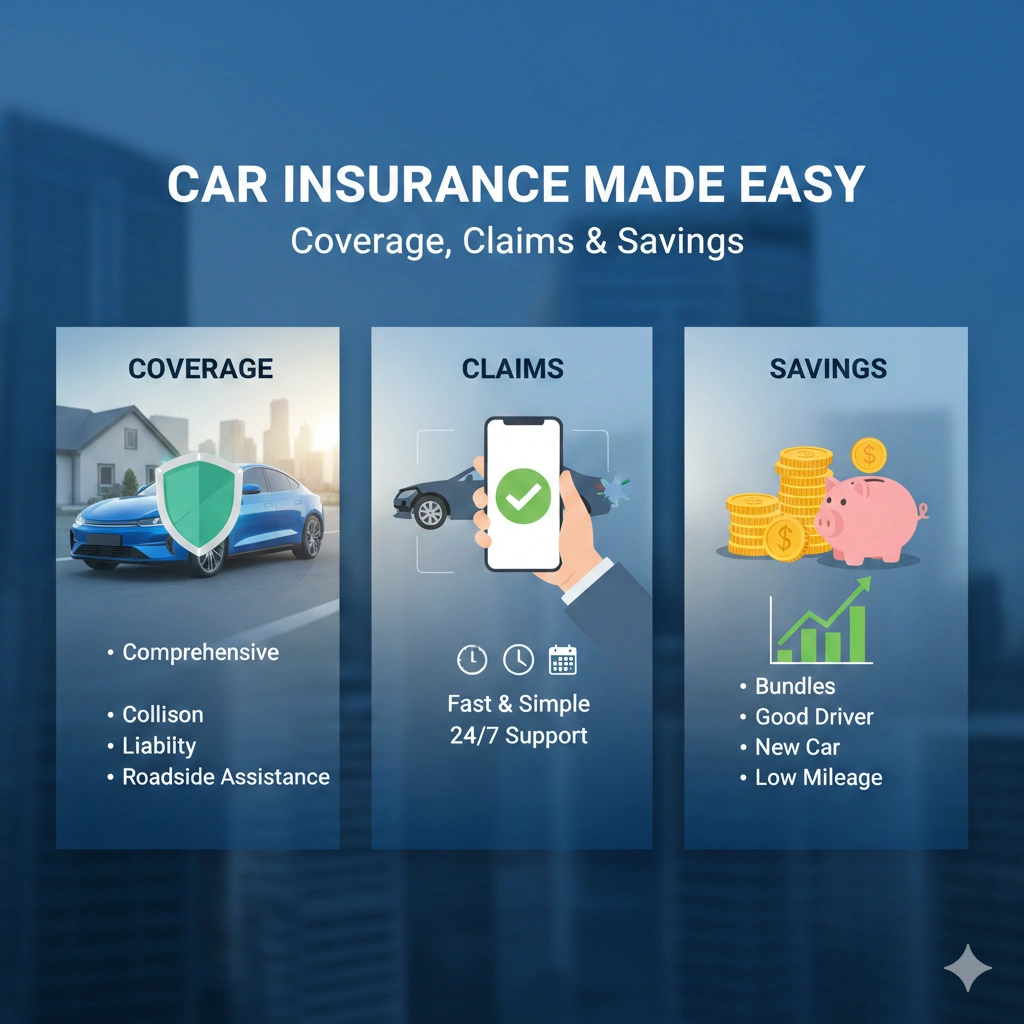
Introduction
Car insurance is no longer just a legal requirement—it is a financial safety net that protects you, your vehicle, and others on the road. Yet, for many people, car insurance still feels confusing, filled with technical terms, hidden conditions, and complicated claim processes. From choosing the right coverage to filing claims and saving money on premiums, understanding car insurance can seem overwhelming.
This detailed guide aims to make car insurance easy by breaking down everything you need to know about coverage options, claims process, and smart ways to save money. Whether you are buying car insurance for the first time or looking to switch to a better policy, this article will help you make informed and confident decisions.
What Is Car Insurance?
Car insurance is a contract between you and an insurance company where you pay a premium, and in return, the insurer provides financial protection against losses caused by accidents, theft, fire, natural disasters, or third-party liabilities.
In most countries, including India, third-party car insurance is mandatory by law. However, relying only on the minimum coverage can expose you to significant financial risk.
Why Car Insurance Is Important
Car insurance is essential for several reasons:
- Legal compliance: Driving without valid insurance can lead to heavy fines or legal action.
- Financial protection: Covers costly repairs, medical expenses, and liabilities.
- Peace of mind: Allows stress-free driving knowing you are protected.
- Protection against theft and disasters: Safeguards your investment from unforeseen events.
- Third-party liability coverage: Protects you if you cause damage or injury to others.
Types of Car Insurance Coverage
Understanding coverage types is the first step to choosing the right policy.
1. Third-Party Car Insurance
This is the basic and mandatory coverage.
What it covers:
- Injury or death of a third party
- Damage to third-party property
What it does not cover:
- Damage to your own car
- Theft or natural disasters
- Personal accident benefits (unless added)
Best for: Older cars or budget-conscious drivers.
2. Comprehensive Car Insurance
This is the most popular and recommended option.
What it covers:
- Third-party liabilities
- Damage to your own car
- Theft
- Fire
- Natural disasters (floods, earthquakes, cyclones)
- Man-made disasters (riots, vandalism)
Best for: New cars, high-value vehicles, and long-term protection.
3. Standalone Own Damage Insurance
This policy covers only your car’s damages and must be purchased along with third-party insurance.
Best for: Drivers who already have third-party coverage but want extra protection.
Common Add-Ons That Enhance Coverage
Add-ons allow you to customize your policy for better protection.
Zero Depreciation Cover
- Eliminates depreciation during claims
- Higher claim payout
- Ideal for new cars
Engine Protection Cover
- Covers engine damage due to waterlogging or oil leakage
- Highly useful in flood-prone areas
Roadside Assistance
- 24/7 help for breakdowns, towing, flat tyres, or battery issues
No Claim Bonus (NCB) Protection
- Protects your NCB even after a claim
Personal Accident Cover
- Provides compensation in case of injury or death of the owner-driver
How Car Insurance Premium Is Calculated
Several factors influence your car insurance premium:
- Car model and age
- Engine capacity
- Insured Declared Value (IDV)
- Type of coverage
- Add-ons selected
- Claim history
- Location
- Anti-theft devices
Understanding these factors helps you control costs and avoid overpaying.
Understanding IDV (Insured Declared Value)
IDV is the maximum amount your insurer will pay if your car is stolen or totally damaged.
- Higher IDV = Higher premium
- Lower IDV = Lower claim payout
Always choose a balanced IDV—not too high, not too low.
Car Insurance Claims Explained
Filing a claim doesn’t have to be stressful if you know the steps.
Types of Claims
- Cashless Claim
- Repairs done at network garages
- Insurer settles the bill directly
- Reimbursement Claim
- You pay first, insurer reimburses later
- Useful when network garages are unavailable
Step-by-Step Car Insurance Claim Process
- Inform the insurer immediately
- File FIR (if required) for theft or major accidents
- Document the damage with photos/videos
- Submit claim form and documents
- Vehicle inspection by surveyor
- Repair approval
- Settlement or reimbursement
Keeping documents ready ensures faster claim settlement.
Documents Required for Car Insurance Claim
- Policy copy
- Driving license
- RC (Registration Certificate)
- FIR copy (if applicable)
- Repair bills
- Claim form
- Photos of the damage
Common Claim Rejection Reasons
Avoid these mistakes to ensure smooth claim approval:
- Driving without a valid license
- Drunk driving
- Delayed claim intimation
- Policy lapse
- Incorrect information
- Unauthorized vehicle modifications
How to Save Money on Car Insurance
Saving money on car insurance doesn’t mean compromising coverage. Here’s how:
Compare Policies Online
Always compare plans from multiple insurers before buying.
Choose Only Necessary Add-Ons
Avoid unnecessary add-ons that increase premium.
Maintain a Claim-Free Record
No claims = No Claim Bonus (up to 50% discount).
Install Anti-Theft Devices
Approved devices can reduce premium.
Renew Policy on Time
Avoid policy lapse to prevent higher premiums.
Opt for Voluntary Deductibles
Higher deductibles lower your premium.
Benefits of Buying Car Insurance Online
- Instant policy issuance
- Lower premiums
- Easy comparison
- Digital documentation
- Transparent terms
- Quick renewals
Online platforms have made car insurance more accessible and affordable than ever.
How to Choose the Right Car Insurance Policy
Ask yourself these questions:
- What is my budget?
- How old is my car?
- Do I need comprehensive coverage?
- Which add-ons are necessary?
- Does the insurer have good claim settlement ratio?
- Are network garages available nearby?
Choosing wisely today can save you thousands tomorrow.
Car Insurance Renewal Tips
- Renew before expiry
- Reassess IDV annually
- Review add-ons
- Check NCB eligibility
- Compare renewal quotes
Myths About Car Insurance
Myth: Red cars have higher premiums
Fact: Color has no impact on premium
Myth: Claims always increase premium
Fact: Only frequent claims do
Myth: Older cars don’t need insurance
Fact: Third-party insurance is mandatory
Future of Car Insurance
With the rise of technology, car insurance is evolving rapidly:
- Usage-based insurance
- AI-powered claim processing
- Telematics-based premiums
- Faster digital settlements
These innovations aim to make insurance even more transparent and customer-friendly.
Conclusion
Car insurance doesn’t have to be complicated. By understanding coverage options, claim procedures, and money-saving strategies, you can choose the right policy with confidence. Whether it’s protecting your car, saving on premiums, or ensuring hassle-free claims, informed decisions make all the difference.
A well-chosen car insurance policy is not an expense—it’s an investment in safety, security, and peace of mind.