
 By Khushi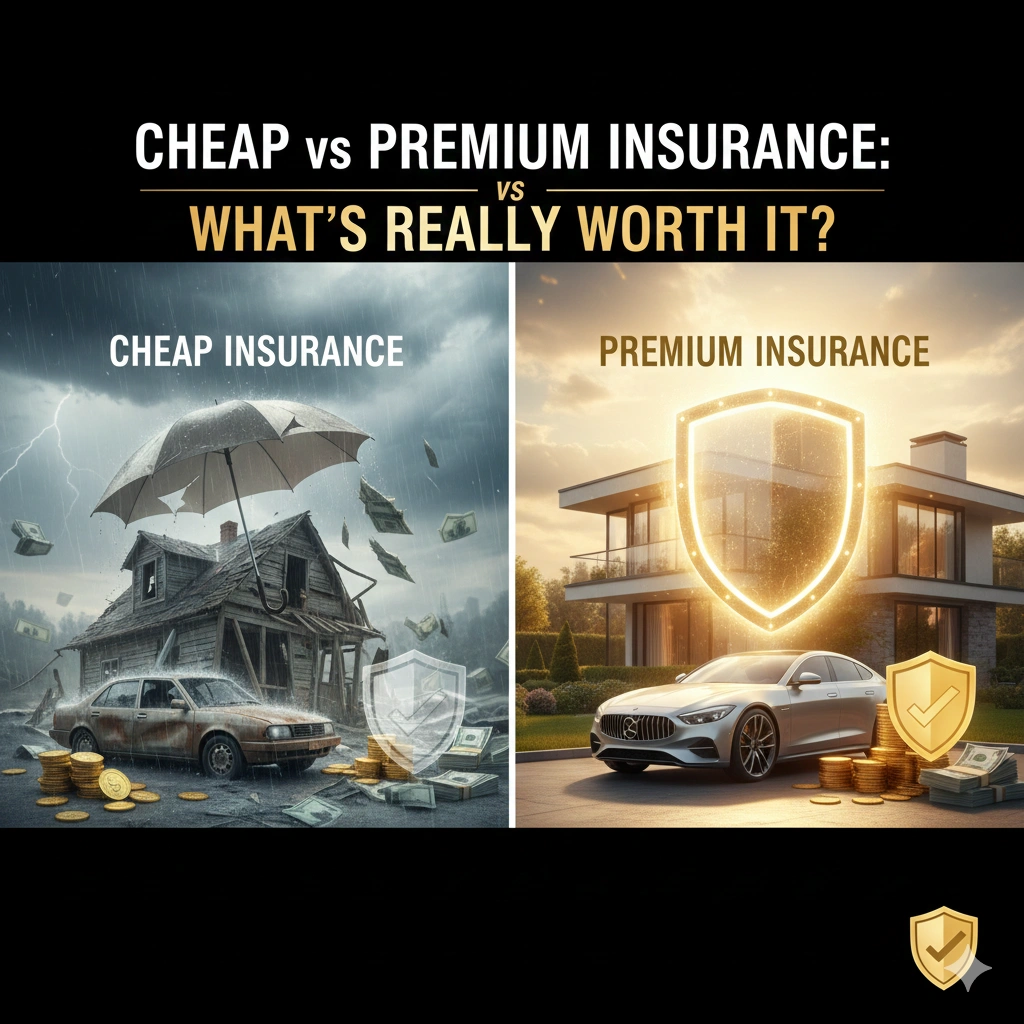
Introduction
When buying insurance, one of the first questions people ask is: Should I choose cheap insurance or premium insurance?
At first glance, cheap insurance looks attractive because of its low monthly cost, while premium insurance promises broader coverage and better benefits. But which one is actually worth your money?
The truth is, the right choice depends on value, not price. Cheap insurance can save you money upfront but may cost you more during a claim. Premium insurance may feel expensive but could protect you better when it matters most.
This article breaks down the real differences between cheap and premium insurance, helping you understand what you’re paying for, what you’re risking, and how to choose the option that truly fits your needs.
Understanding Cheap Insurance
Cheap insurance refers to policies with low premiums and basic coverage.
Key Features of Cheap Insurance
- Lower monthly or annual premiums
- Limited coverage benefits
- Higher deductibles or co-payments
- More exclusions
- Fewer add-ons
These policies are designed to meet minimum requirements or provide basic protection.
Understanding Premium Insurance
Premium insurance offers broader coverage and additional benefits at a higher cost.
Key Features of Premium Insurance
- Higher premiums
- Comprehensive coverage
- Lower deductibles
- Fewer exclusions
- Faster and smoother claim experience
Premium plans focus on convenience, flexibility, and enhanced protection.
Cheap vs Premium Insurance: A Side-by-Side Comparison
1. Cost of Premiums
- Cheap insurance: Low upfront cost
- Premium insurance: Higher but stable cost
2. Coverage Scope
- Cheap insurance: Basic coverage
- Premium insurance: Extensive protection
3. Deductibles and Co-Pay
- Cheap insurance: High out-of-pocket expenses
- Premium insurance: Lower personal contribution
4. Claim Settlement
- Cheap insurance: Slower or restrictive claims
- Premium insurance: Faster and smoother claims
5. Peace of Mind
- Cheap insurance: Limited confidence
- Premium insurance: Greater assurance
When Cheap Insurance Makes Sense
Cheap insurance is not always bad. In some situations, it’s actually the smarter choice.
Ideal Scenarios for Cheap Insurance
- Young and healthy individuals
- Limited financial responsibilities
- Backup or secondary coverage
- Short-term needs
Example: A young individual with employer health insurance may opt for a low-cost top-up plan.
When Premium Insurance Is Worth It
Premium insurance shines during high-risk or high-value situations.
Ideal Scenarios for Premium Insurance
- Families with dependents
- Individuals with health conditions
- Owners of valuable assets
- Those seeking hassle-free claims
When financial impact is high, premium insurance offers better protection.
Health Insurance: Cheap vs Premium
Cheap Health Insurance
- Lower sum insured
- Room rent caps
- Higher co-payments
- Limited hospital network
Premium Health Insurance
- High sum insured
- No room rent limits
- Wider hospital network
- Better pre- and post-hospitalization coverage
Healthcare costs are unpredictable—premium plans often provide better long-term value.
Life Insurance: Cheap vs Premium
Cheap Life Insurance (Term Plans)
- Very affordable
- High coverage
- No maturity benefits
Premium Life Insurance (Whole Life / ULIPs)
- Higher premiums
- Investment or savings component
- Lower pure insurance coverage
For protection, cheap term insurance is often the best value.
Motor Insurance: Cheap vs Premium
Cheap Motor Insurance
- Third-party coverage only
- Limited protection
Premium Motor Insurance
- Comprehensive coverage
- Zero depreciation add-ons
- Better repair experience
If your vehicle is new or expensive, premium coverage is worth it.
Home Insurance: Cheap vs Premium
Cheap Home Insurance
- Structure-only coverage
- Basic protection
Premium Home Insurance
- Structure + contents
- Disaster and theft coverage
For homeowners, premium insurance often offers greater peace of mind.
Hidden Costs in Cheap Insurance
Cheap insurance may seem economical, but hidden costs can appear during claims.
Common Hidden Costs
- High deductibles
- Sub-limits on treatment
- Claim rejections due to exclusions
- Out-of-network charges
These can turn a cheap policy into an expensive mistake.
Are Premium Insurance Plans Always Better?
Not necessarily.
Downsides of Premium Insurance
- Higher premiums
- Risk of over-insurance
- Paying for features you may never use
Premium insurance is only worth it if the benefits align with your needs.
How to Decide What’s Really Worth It
1. Evaluate Your Risk Profile
Age, health, income, and responsibilities matter.
2. Consider Financial Impact
Ask: “Can I afford the loss without insurance?”
3. Balance Cost and Coverage
The best policy offers maximum value—not just a low price.
4. Compare Policies Carefully
Use comparison tools and read the fine print.
The Role of Deductibles in Cost vs Value
Higher deductibles lower premiums but increase out-of-pocket costs.
Smart Strategy
Choose deductibles based on emergency savings and risk tolerance.
Cheap vs Premium Insurance for Families
Families usually benefit more from premium or balanced plans due to:
- Higher medical risks
- Dependents relying on income
- Education and housing responsibilities
Underinsurance can be financially devastating.
Cheap vs Premium Insurance for Young Adults
Young individuals can start with:
- Affordable term insurance
- Basic health coverage
- Upgrade later as income grows
This phased approach balances cost and protection.
Cheap vs Premium Insurance for Seniors
Seniors often require:
- Broader health coverage
- Lower co-payments
- Faster claims
Premium plans often provide better support for aging needs.
Long-Term Value vs Short-Term Savings
Cheap insurance focuses on short-term savings, while premium insurance focuses on long-term value.
The right policy balances both.
Digital Insurance: Bridging the Gap
Modern digital insurers offer value-packed plans that combine:
- Affordable premiums
- Premium-like benefits
- Transparent pricing
These plans challenge the traditional cheap vs premium divide.
Future Trends in Insurance Pricing
- Usage-based pricing
- Personalized risk assessment
- AI-driven underwriting
These trends will make insurance more fair and value-driven.
Conclusion
So, cheap vs premium insurance—what’s really worth it?
The answer lies in value, not labels.
Cheap insurance is worth it when risks are low and financial exposure is limited. Premium insurance is worth it when the cost of loss is high and peace of mind matters most. The smartest choice is a balanced plan—affordable, adequate, and aligned with your life stage.
Insurance should protect you, not drain your wallet or leave you vulnerable. Choose wisely, compare carefully, and focus on what truly matters.