
 By Khushi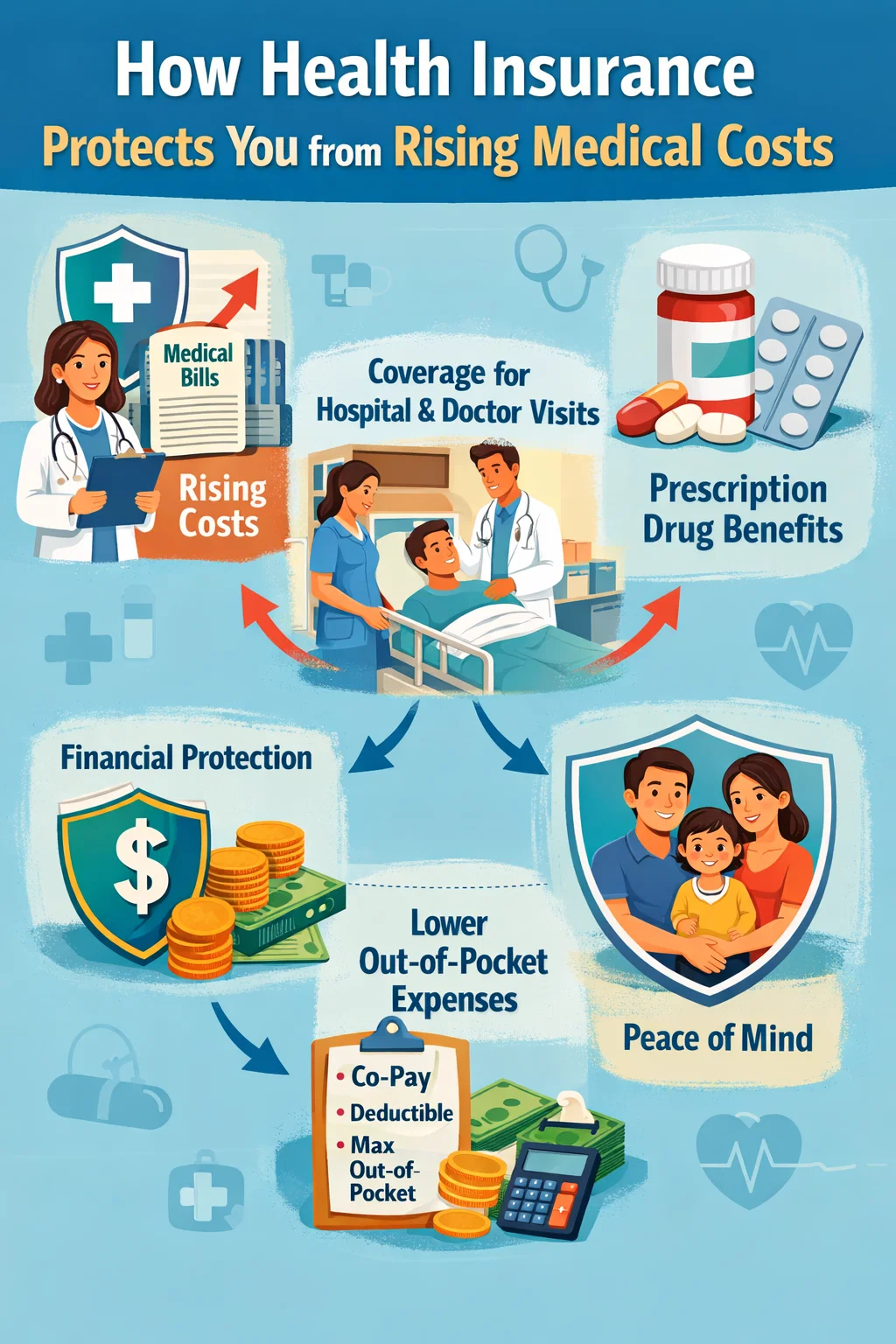
Introduction
Medical costs are increasing faster than most people’s incomes. From hospital room charges and diagnostic tests to advanced surgeries and long-term treatments, healthcare has become one of the biggest financial challenges of modern life. What once cost a few thousand can now cost lakhs or even more, and this trend shows no signs of slowing down.
In such a scenario, health insurance plays a crucial role. It is no longer just a safety option—it is a necessity. Health insurance acts as a financial shield, protecting individuals and families from the heavy burden of rising medical expenses while ensuring access to quality healthcare.
This article explains how health insurance protects you from rising medical costs, why it is essential in today’s world, and how it supports both your health and financial stability.
Understanding the Problem of Rising Medical Costs
Healthcare inflation is growing rapidly due to several factors:
- Advanced medical technology and equipment
- Increasing cost of medicines and diagnostics
- Higher hospital infrastructure and operational costs
- Specialist doctor fees
- Longer life expectancy and chronic diseases
As a result, even a short hospital stay can cost a significant amount. Major surgeries or critical illnesses can wipe out years of savings within days.
What Is Health Insurance?
Health insurance is a contract between an individual and an insurance provider in which the insurer agrees to cover medical expenses in exchange for a premium. These expenses may include:
- Hospitalization
- Doctor consultations
- Surgeries
- Medicines
- Diagnostic tests
- Pre- and post-hospitalization care
Health insurance reduces the financial impact of medical treatment and ensures that healthcare remains affordable even as costs rise.
How Health Insurance Offsets Medical Inflation
Medical inflation often rises faster than general inflation. Health insurance helps counter this effect in several ways:
1. Coverage for Expensive Treatments
Health insurance covers high-cost treatments that would otherwise be difficult to afford. This includes surgeries, ICU care, and specialized treatments.
2. Higher Sum Insured Options
Modern policies offer higher coverage limits, helping policyholders stay protected against rising healthcare costs.
3. Top-Up and Super Top-Up Plans
These plans increase coverage at a lower premium, offering extra protection against large medical bills.
Protection Against Sudden Hospitalization Costs
Unexpected hospitalizations are one of the biggest financial shocks for families.
Health insurance protects you by covering:
- Room rent and ICU charges
- Surgery and anesthesia fees
- Doctor and nursing charges
- Medicines and consumables
Without insurance, these expenses must be paid out of pocket, often leading to loans or asset liquidation.
Cashless Hospitalization Reduces Immediate Financial Burden
One of the strongest advantages of health insurance is cashless hospitalization.
Benefits of Cashless Treatment:
- No need for immediate cash payment
- Direct settlement between insurer and hospital
- Faster admission during emergencies
- Reduced financial stress
Cashless treatment ensures timely medical care without worrying about arranging funds.
Coverage for Pre- and Post-Hospitalization Expenses
Medical costs do not begin and end with hospitalization.
Health insurance covers:
- Diagnostic tests before admission
- Doctor consultations before treatment
- Follow-up visits after discharge
- Medicines and recovery-related expenses
This comprehensive coverage protects you from hidden costs that often go unnoticed.
Protection from Long-Term and Chronic Illness Costs
Chronic diseases such as diabetes, heart disease, and arthritis require ongoing treatment.
Health insurance helps by covering:
- Regular consultations
- Diagnostic tests
- Hospitalization for complications
- Long-term treatment expenses
This reduces the long-term financial burden on patients and families.
Critical Illness Coverage and Lump-Sum Benefits
Many health insurance plans offer critical illness coverage.
How it helps:
- Provides a lump-sum payout upon diagnosis
- Covers non-medical expenses
- Helps replace lost income during recovery
This benefit is especially valuable as critical illnesses often involve prolonged treatment and lifestyle changes.
Health Insurance Prevents Savings Depletion
Without health insurance, medical emergencies often force people to:
- Use emergency savings
- Break fixed deposits
- Sell investments
- Take high-interest loans
Health insurance protects savings and investments, ensuring long-term financial goals remain intact.
Role of Health Insurance in Family Financial Security
For families, rising medical costs can affect multiple members at once.
Family health insurance plans:
- Cover all members under one policy
- Reduce combined premium costs
- Offer comprehensive protection
This ensures that the entire family is protected without financial strain.
Health Insurance for Senior Citizens and Aging Costs
Healthcare costs increase with age due to higher medical needs.
Health insurance helps seniors by:
- Covering age-related illnesses
- Providing access to regular healthcare
- Reducing dependency on family finances
Buying health insurance early ensures better coverage and manageable premiums in later years.
Employer Health Insurance Is Not Enough
Employer-provided insurance often has limitations:
- Lower coverage limits
- Ends with job change
- Limited customization
Personal health insurance ensures continuous and sufficient protection regardless of employment status.
Preventive Care Reduces Future Medical Expenses
Many health insurance plans include preventive benefits such as:
- Free annual health check-ups
- Wellness programs
- Early disease detection
Preventive care reduces the risk of expensive treatments later, helping control long-term medical costs.
Mental Health Coverage in Modern Health Insurance
Mental health treatment is becoming increasingly important and expensive.
Modern policies now cover:
- Therapy sessions
- Psychiatric consultations
- Mental health hospitalization
This coverage ensures mental well-being without excessive financial burden.
Health Insurance vs Paying Medical Bills Yourself
| Aspect | With Health Insurance | Without Health Insurance |
|---|---|---|
| Hospital Costs | Covered as per policy | Fully out-of-pocket |
| Emergency Stress | Minimal | Very high |
| Savings Protection | Yes | No |
| Treatment Quality | Better access | Often compromised |
| Long-Term Stability | Maintained | At risk |
How Health Insurance Supports Better Healthcare Decisions
When cost is not a barrier:
- Patients seek timely treatment
- Doctors can recommend best options
- Recovery outcomes improve
Health insurance empowers people to choose health over cost concerns.
The Role of Health Insurance in Financial Planning
Health insurance is a core part of financial planning because it:
- Protects emergency funds
- Preserves investments
- Secures retirement savings
It ensures that medical inflation does not derail financial goals.
Impact of Global Health Crises on Medical Costs
Recent global health events have shown how quickly medical costs can rise.
Health insurance provides:
- Coverage during pandemics
- Protection against sudden large-scale medical expenses
- Financial stability during uncertain times
Preparedness is essential in a world of unpredictable health risks.
Choosing the Right Health Insurance to Combat Rising Costs
Key factors to consider:
- Adequate sum insured
- Wide hospital network
- Minimal co-payments
- High claim settlement ratio
- Coverage for modern treatments
Choosing wisely ensures maximum protection against future medical inflation.
Common Mistakes That Increase Medical Expense Risk
- Buying low coverage to save premium
- Ignoring exclusions and limits
- Delaying policy purchase
- Relying only on employer insurance
Avoiding these mistakes strengthens financial protection.
Health Insurance as a Long-Term Investment
Health insurance is not an expense—it is a long-term investment in:
- Health security
- Financial stability
- Peace of mind
Its real value is realized during medical emergencies.
Future of Health Insurance and Cost Protection
Health insurance is evolving with:
- Digital claims
- AI-driven underwriting
- Personalized coverage options
These advancements improve efficiency and reduce hidden costs for policyholders.
Conclusion
Rising medical costs are a reality that affects everyone, regardless of age or income. Health insurance is the most effective tool to protect yourself and your family from the financial impact of expensive healthcare. It covers hospitalization, long-term treatments, preventive care, and critical illnesses—ensuring that medical inflation does not destroy financial stability.
By choosing the right health insurance plan early, you secure not only access to quality healthcare but also protect your savings, investments, and future goals. In a world where healthcare costs continue to rise, health insurance is your strongest financial defense.