
 By Khushi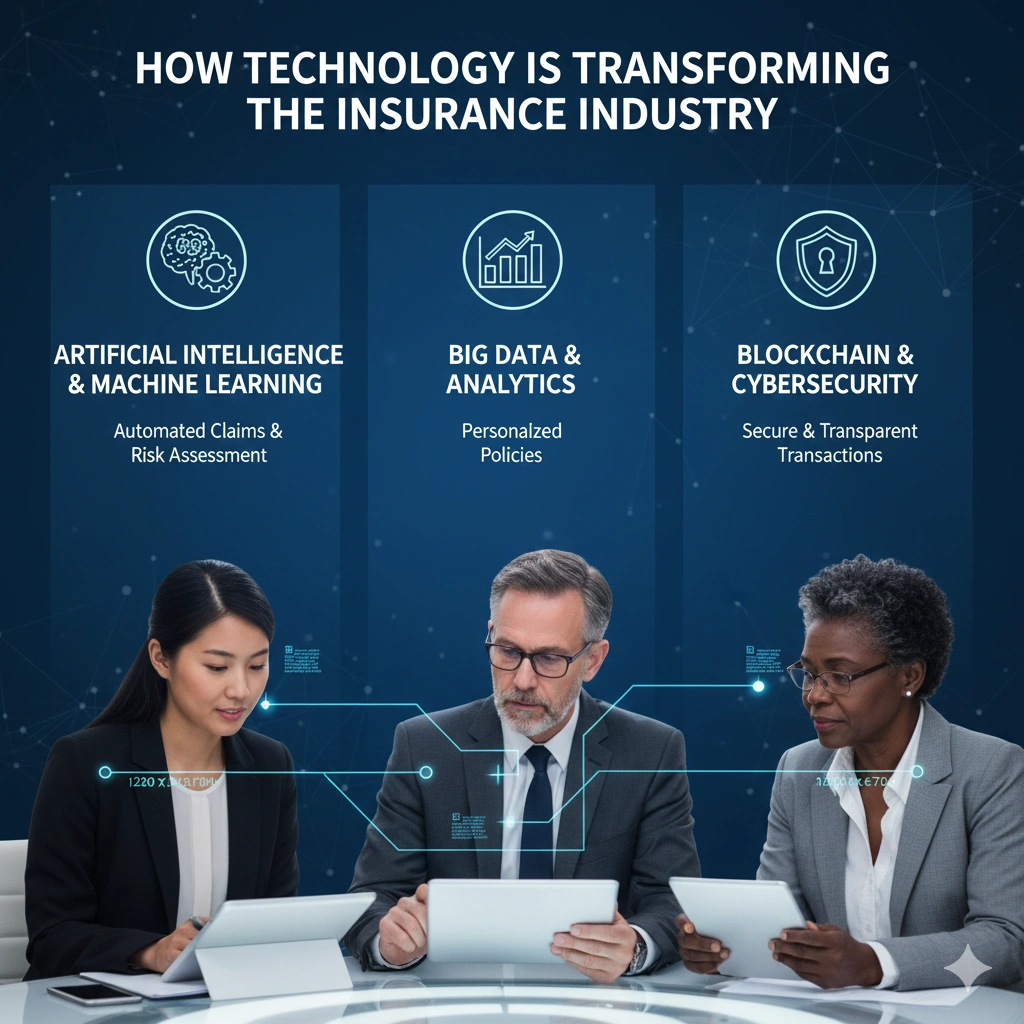
The insurance industry, traditionally seen as conservative and paperwork-heavy, is undergoing one of the most significant transformations in its history. Rapid advancements in technology are reshaping how insurance products are designed, sold, managed, and claimed. From artificial intelligence and big data to blockchain and mobile apps, technology is redefining customer experience, operational efficiency, and risk management.
This detailed guide explains how technology is transforming the insurance industry, the key innovations driving change, benefits for customers and insurers, challenges involved, and what the future holds.
1. The Traditional Insurance Model: A Brief Overview
For decades, insurance relied on:
- Physical paperwork
- Agents and intermediaries
- Manual underwriting
- Lengthy claim settlement processes
- Limited transparency
While functional, this model often resulted in delays, higher costs, customer dissatisfaction, and inefficiencies. Technology emerged as the solution to these long-standing challenges.
2. The Rise of Digital Transformation in Insurance
Digital transformation in insurance refers to the integration of advanced technologies into every aspect of the business.
Key Drivers:
- Increased internet and smartphone usage
- Changing customer expectations
- Competition from insurtech startups
- Demand for faster, transparent services
- Need for cost optimization
This shift has turned insurers into tech-enabled service providers
3. Role of Artificial Intelligence (AI) in Insurance
AI is one of the most powerful technologies reshaping the insurance industry.
How AI Is Used:
- Automated underwriting
- Chatbots and virtual assistants
- Fraud detection
- Predictive analytics
- Personalized policy recommendations
AI enables insurers to process large volumes of data quickly, reduce human error, and make smarter decisions.
4. Machine Learning and Predictive Analytics
Machine learning helps insurers predict risks more accurately.
Applications:
- Risk profiling
- Claim probability forecasting
- Customer behavior analysis
- Dynamic pricing models
This leads to fairer premiums and better customer segmentation.
5. Big Data: The Backbone of Modern Insurance
Insurance companies deal with massive amounts of data daily.
Big Data Sources:
- Customer demographics
- Medical records
- Driving behavior
- Wearable devices
- Social and transactional data
Big data analytics allows insurers to understand risk patterns, prevent fraud, and offer customized coverage.
6. Personalization of Insurance Products
Technology has shifted insurance from “one-size-fits-all” to personalized solutions.
Benefits of Personalization:
- Customized premiums
- Tailored coverage
- Usage-based insurance
- Improved customer satisfaction
Customers now pay for what they actually need.
7. Mobile Apps and Self-Service Platforms
Mobile technology has transformed customer interaction.
Features Offered:
- Policy purchase and renewal
- Digital document storage
- Claim filing and tracking
- Premium payment reminders
- Customer support chat
Insurance is now accessible anytime, anywhere.
8. Automation in Underwriting and Policy Issuance
Automation has reduced processing time dramatically.
Impact:
- Faster policy approvals
- Reduced operational costs
- Improved accuracy
- Minimal paperwork
Customers can now buy insurance in minutes instead of days.
9. Digital Claims Processing: A Game Changer
Claims are the most critical touchpoint for customers.
How Technology Helps:
- Online claim submission
- Photo and video-based damage assessment
- AI-powered claim approval
- Real-time status tracking
This improves transparency and builds trust.
10. Blockchain Technology in Insurance
Blockchain brings transparency, security, and efficiency.
Use Cases:
- Smart contracts
- Fraud prevention
- Secure data sharing
- Faster claim settlements
Blockchain reduces disputes and ensures tamper-proof records.
11. Internet of Things (IoT) and Insurance
IoT devices provide real-time data.
Examples:
- Wearables for health insurance
- Telematics devices for motor insurance
- Smart home sensors for property insurance
IoT enables proactive risk management and usage-based pricing.
12. Usage-Based and On-Demand Insurance
Technology has enabled flexible insurance models.
Examples:
- Pay-as-you-drive car insurance
- On-demand travel insurance
- Short-term coverage for gadgets
Customers enjoy flexibility and cost efficiency.
13. Insurtech Startups: Driving Innovation
Insurtech companies are technology-focused insurance startups.
Their Impact:
- Simplified user experiences
- Faster digital onboarding
- Innovative products
- Competitive pricing
They push traditional insurers to modernize and innovate.
14. Cloud Computing in Insurance Operations
Cloud technology supports scalability and efficiency.
Benefits:
- Secure data storage
- Faster system upgrades
- Reduced infrastructure costs
- Improved collaboration
Cloud-based systems enhance agility.
15. Cybersecurity and Data Protection
With digitalization comes increased cyber risk.
Key Focus Areas:
- Data encryption
- Secure authentication
- Regulatory compliance
- Fraud monitoring
Strong cybersecurity is essential to maintain customer trust.
16. Regulatory Technology (RegTech)
RegTech helps insurers comply with regulations efficiently.
Advantages:
- Automated compliance checks
- Real-time reporting
- Reduced regulatory risk
Technology ensures transparency and accountability.
17. Customer Experience Transformation
Technology has placed customers at the center.
Improvements:
- Faster service delivery
- Clear policy information
- Easy comparisons
- 24/7 support
Happy customers lead to higher retention.
18. Cost Efficiency and Operational Excellence
Automation and analytics reduce overhead costs.
Impact:
- Lower premiums
- Faster service
- Improved profitability
Efficiency benefits both insurers and customers.
19. Challenges in Technological Adoption
Despite progress, challenges remain.
Common Issues:
- Legacy systems
- Skill gaps
- Data privacy concerns
- Resistance to change
Overcoming these requires investment and training.
20. Digital Inclusion and Accessibility
Technology helps expand insurance reach.
Benefits:
- Affordable micro-insurance
- Rural and remote access
- Simplified onboarding
This promotes financial inclusion.
21. Technology and Risk Management
Advanced tools improve risk assessment.
Tools Used:
- Predictive modeling
- AI-driven analytics
- Real-time monitoring
Better risk management ensures sustainability.
22. Impact of COVID-19 on Insurance Technology
The pandemic accelerated digital adoption.
Key Changes:
- Surge in online policy purchases
- Growth in health insurance
- Preference for contactless services
Technology proved essential during crisis.
23. Future Trends in Insurance Technology
The future of insurance is highly tech-driven.
Emerging Trends:
- Hyper-personalization
- Embedded insurance
- Voice-enabled services
- Metaverse insurance
- Advanced AI underwriting
Innovation will continue to shape the industry.
24. How Customers Benefit from Tech-Driven Insurance
Technology empowers customers with:
- Control
- Transparency
- Speed
- Choice
Insurance becomes a service, not a burden.
25. Conclusion
Technology is transforming the insurance industry from a slow, complex system into a fast, transparent, and customer-focused ecosystem. AI, big data, blockchain, mobile apps, and automation are redefining how insurance works—making it more accessible, affordable, and efficient.
As innovation continues, insurers who embrace technology will thrive, while customers will enjoy smarter financial protection. The future of insurance is digital, data-driven, and deeply connected to everyday life.