
 By Khushi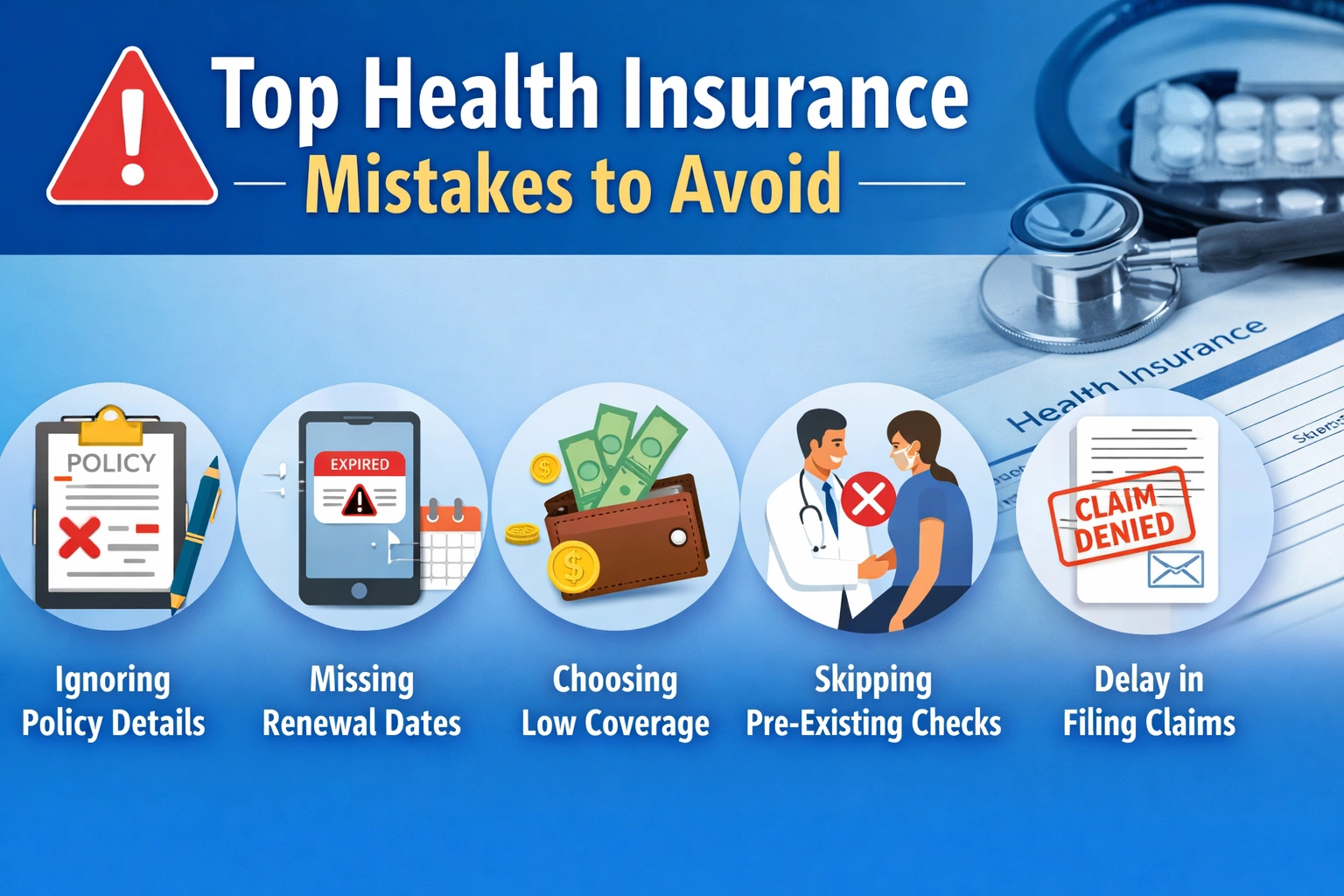
Introduction
Health insurance is one of the most important financial decisions you will ever make. Yet, many people either delay buying it or choose the wrong policy due to lack of awareness, misleading advice, or focus on short-term savings. These mistakes often come to light only during medical emergencies—when it is already too late.
With rising healthcare costs, a single wrong decision can lead to claim rejection, heavy out-of-pocket expenses, or even financial crisis. Understanding common health insurance mistakes and learning how to avoid them can save you money, stress, and disappointment in the long run.
This detailed guide explains the top health insurance mistakes to avoid, helping you make smarter, more secure choices for yourself and your family.
1. Delaying the Purchase of Health Insurance
One of the biggest mistakes people make is postponing the purchase of health insurance.
Why This Is a Problem
- Premiums increase with age
- Pre-existing conditions may not be covered immediately
- Waiting periods can delay benefits
- Medical emergencies can happen anytime
Buying early ensures lower premiums, better coverage, and peace of mind.
2. Choosing a Policy Only Based on Low Premium
A cheap premium often looks attractive, but it can be misleading.
Hidden Risks
- Low coverage amount
- Higher co-payments
- Sub-limits on room rent and treatments
- Limited hospital network
Instead of focusing only on price, evaluate the value and coverage offered by the policy.
3. Buying Insufficient Coverage Amount
Many people underestimate future medical costs and choose low coverage.
Why Adequate Coverage Matters
- Hospitalization costs are rising rapidly
- Advanced treatments are expensive
- ICU charges can be extremely high
Choosing a higher sum insured protects you from large out-of-pocket expenses.
4. Ignoring Policy Exclusions
Every health insurance policy has exclusions—treatments or conditions not covered.
Commonly Ignored Exclusions
- Cosmetic procedures
- Alternative treatments
- Certain pre-existing diseases
- Self-inflicted injuries
Always read the exclusion section carefully to avoid unpleasant surprises during claims.
5. Not Understanding Waiting Periods
Waiting periods define when specific benefits become active.
Types of Waiting Periods
- Initial waiting period
- Pre-existing disease waiting period
- Specific illness waiting period
Failing to understand these timelines can lead to claim rejection when you need coverage most.
6. Relying Only on Employer-Provided Health Insurance
Employer health insurance is useful but often insufficient.
Limitations
- Coverage ends when you leave the job
- Low sum insured
- Limited customization
- May not cover dependents adequately
A personal health insurance policy ensures continuous and comprehensive protection.
7. Not Disclosing Medical History Honestly
Hiding or misrepresenting medical information is a serious mistake.
Consequences
- Claim rejection
- Policy cancellation
- Loss of premium paid
Always disclose your medical history truthfully to avoid problems during claims.
8. Overlooking Co-Payment Clauses
Co-payment means you pay a fixed percentage of medical costs.
Why This Matters
- Higher out-of-pocket expenses
- Unexpected financial burden during hospitalization
Choose policies with minimal or no co-payment whenever possible.
9. Ignoring Sub-Limits on Room Rent and Treatments
Some policies restrict the maximum amount payable for room rent or specific procedures.
Impact of Sub-Limits
- Higher personal expenses
- Reduced claim amount
Always check whether your policy has room rent or treatment sub-limits.
10. Not Checking the Hospital Network
Cashless hospitalization depends on the insurer’s hospital network.
Risks of Limited Network
- No cashless facility nearby
- Delayed treatment
- Higher upfront payments
Choose a policy with a wide hospital network near your location.
11. Skipping Policy Renewal
Missing renewal deadlines can lead to loss of benefits.
What You Lose
- Waiting period benefits
- No-claim bonuses
- Coverage continuity
Set reminders and ensure timely renewal every year.
12. Not Including Family Members Properly
Failing to add dependents correctly is a common mistake.
Consequences
- Claims rejected for uncovered members
- Separate policies increase costs
A family floater plan often provides better coverage at a lower cost.
13. Ignoring Preventive Care Benefits
Many policies offer free health check-ups and wellness benefits.
Why This Is a Mistake
- Missed early disease detection
- Higher long-term treatment costs
Preventive care helps reduce future medical expenses.
14. Choosing a Policy Without Mental Health Coverage
Mental health treatment is increasingly important and expensive.
Modern Policies Cover
- Therapy sessions
- Psychiatric consultations
- Mental health hospitalization
Ignoring this coverage can lead to significant out-of-pocket expenses.
15. Not Comparing Multiple Health Insurance Plans
Buying the first policy you see is risky.
Why Comparison Is Essential
- Better coverage options
- Lower premiums for same benefits
- Better claim settlement ratios
Comparing plans ensures you get the best value for money.
16. Overlooking Claim Settlement Ratio
Claim settlement ratio reflects how reliable an insurer is.
Low Ratio Means
- Higher chances of claim rejection
- Delayed settlements
Choose insurers with a strong claim settlement record.
17. Ignoring Policy Portability Options
Many people stick to unsuitable policies for years.
Portability Benefits
- Switch insurers without losing benefits
- Better coverage options
Know your rights and use portability when needed.
18. Buying Without Reading Policy Terms
Skipping policy documents is a costly mistake.
What You Miss
- Coverage details
- Conditions and exclusions
- Claim procedures
Always read the policy wording carefully.
19. Not Considering Future Medical Needs
Your health needs change over time.
Future Factors
- Marriage
- Children
- Aging parents
- Lifestyle changes
Choose a policy that adapts to your future needs.
20. Treating Health Insurance as an Expense Instead of Protection
Health insurance is not a waste of money.
Reality
- It protects savings
- Ensures access to quality care
- Provides peace of mind
Viewing it as protection helps you choose wisely.
How to Avoid These Health Insurance Mistakes
- Buy early
- Choose adequate coverage
- Read policy documents carefully
- Compare plans
- Disclose medical history honestly
- Review coverage periodically
Role of Health Insurance in Financial Planning
Health insurance safeguards:
- Emergency funds
- Investments
- Long-term financial goals
Avoiding common mistakes strengthens your overall financial plan
Long-Term Benefits of Making the Right Choice
- Lower lifetime premiums
- Better coverage
- Stress-free claims
- Financial stability during emergencies
Conclusion
Health insurance mistakes are common—but they are also avoidable. From delaying purchase and choosing low coverage to ignoring policy details and exclusions, these errors can cost you dearly when you need help the most.
By understanding and avoiding the top health insurance mistakes, you can ensure better coverage, smoother claims, and long-term financial security. A well-chosen health insurance policy is not just protection—it is peace of mind for you and your family.