
 By Khushi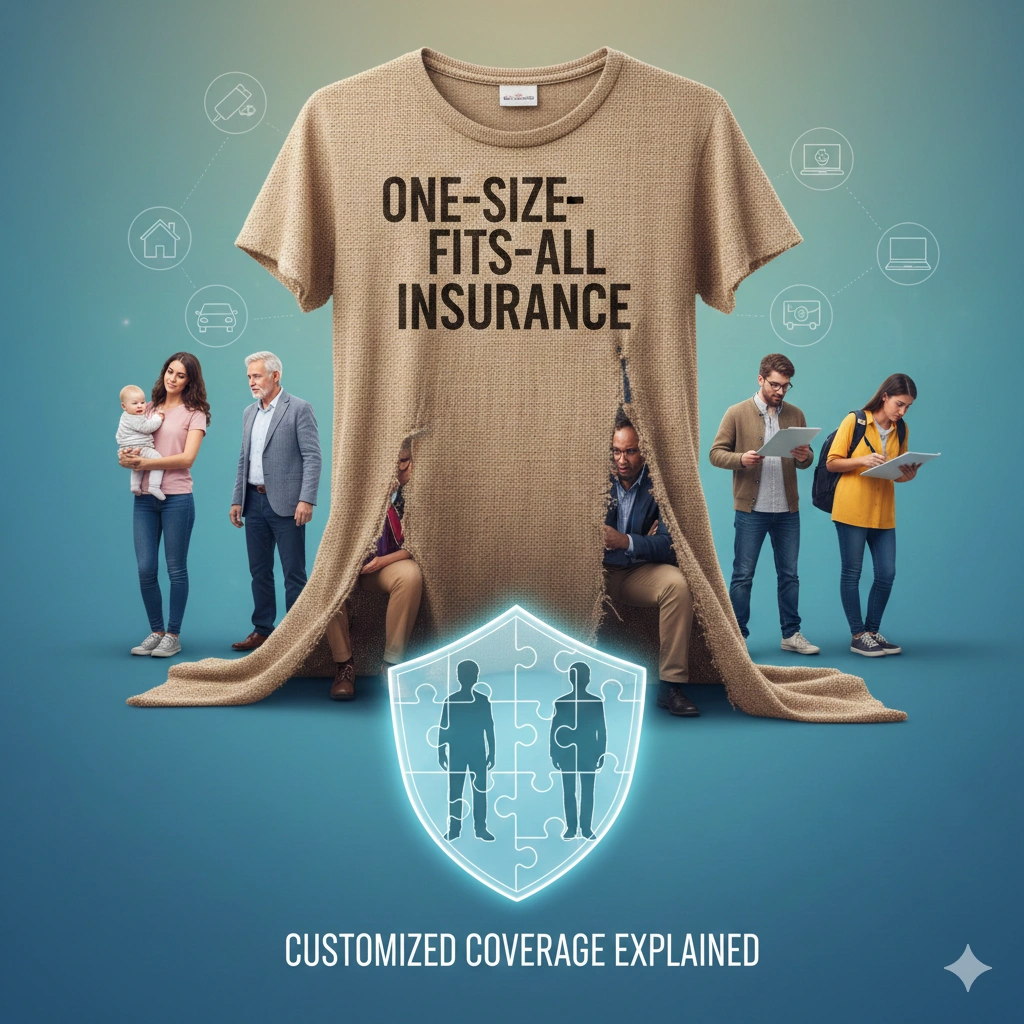
For decades, insurance was sold as a standardized product—one policy designed to meet the needs of millions. While this approach once worked in a simpler, more predictable world, today’s reality is vastly different. Modern lifestyles are diverse, financial responsibilities vary widely, and risks are more complex than ever. As a result, one-size-fits-all insurance no longer works.
Consumers today seek flexibility, relevance, and value. They want insurance that reflects their age, lifestyle, profession, health condition, and financial goals. This growing demand has led to the rise of customized insurance coverage, a smarter and more effective way to manage risk.
This article explains why traditional insurance models are failing, how customized coverage works, and why personalization is the future of insurance.
The Traditional One-Size-Fits-All Insurance Model
The one-size-fits-all approach to insurance was built on simplicity. Insurers offered standardized plans with fixed benefits, premiums, and exclusions. Customers were expected to adapt their needs to the policy rather than the other way around.
Key Characteristics of Traditional Insurance
- Fixed coverage limits
- Limited flexibility in benefits
- Standard premium structures
- Broad assumptions about risk
- Minimal customization options
While this model simplified policy administration, it ignored individual differences—an issue that has become increasingly problematic.
Why One-Size-Fits-All Insurance No Longer Works
1. Diverse Lifestyles and Life Choices
Modern consumers live vastly different lives. Some work full-time, others freelance. Some start families early, others later or not at all. Some travel frequently, while others live locally.
A single insurance policy cannot effectively address:
- A digital nomad and a factory worker
- A single professional and a family of five
- A healthy 25-year-old and a 55-year-old with medical history
Uniform insurance fails to reflect real-world diversity.
2. Changing Life Stages and Responsibilities
Insurance needs change with life stages. What works in your twenties may be completely inadequate in your forties.
Examples include:
- A young adult needing basic health and accident cover
- A parent requiring high life insurance coverage
- A retiree needing enhanced healthcare benefits
One-size-fits-all policies lack the flexibility to adapt as life evolves.
3. Over-Insurance and Under-Insurance
Standardized policies often result in:
- Over-insurance: Paying for benefits you don’t need
- Under-insurance: Lacking coverage when you need it most
Both scenarios lead to financial inefficiency and risk exposure. Customized coverage solves this by aligning protection with actual needs.
4. Affordability and Budget Constraints
Fixed insurance plans often force customers to pay for unnecessary features, making policies expensive and inaccessible for many.
Customized insurance allows:
- Modular coverage selection
- Adjustable deductibles
- Flexible premium payments
This ensures affordability without compromising essential protection.
5. Health and Risk Profiles Are Not the Same
People differ in health conditions, genetic history, and lifestyle habits.
One-size-fits-all insurance fails to account for:
- Chronic conditions
- Fitness and wellness habits
- Occupation-based risk exposure
Personalized underwriting ensures fair pricing and relevant coverage.
What Is Customized Insurance Coverage?
Customized insurance coverage is designed by assessing an individual’s personal, professional, and financial profile. Instead of offering a rigid package, insurers provide flexible components that policyholders can adjust.
Key Elements of Customized Insurance
- Adjustable coverage limits
- Optional riders and add-ons
- Flexible premium structures
- Lifestyle and occupation-based benefits
- Periodic policy upgrades
Customization transforms insurance into a dynamic financial tool.
Types of Insurance That Benefit from Customization
Customized Health Insurance
Health insurance needs vary greatly based on age, health status, and family size.
Customization options include:
- Individual or family floater plans
- Maternity and childcare riders
- Critical illness coverage
- OPD and wellness benefits
Personalized health insurance ensures comprehensive care without unnecessary costs.
Customized Life Insurance
Life insurance requirements depend on income, liabilities, and dependents.
Key customizable features:
- Coverage amount based on financial goals
- Policy term aligned with responsibilities
- Riders for accident, disability, and critical illness
This ensures adequate financial protection for loved ones.
Customized Motor and Travel Insurance
Usage patterns vary widely among individuals.
Customization includes:
- Usage-based motor insurance
- Add-ons for roadside assistance
- International travel coverage
- Emergency evacuation benefits
Customized plans provide protection based on actual usage, not assumptions.
Life-Stage-Based Customized Insurance
Insurance for Young Adults
Young adults benefit from:
- Low-cost basic coverage
- Accident and emergency protection
- Entry-level life insurance
Customization keeps premiums affordable while building long-term protection.
Insurance for Families
Families need:
- Comprehensive health coverage
- High-value life insurance
- Child-focused riders
Customized insurance ensures family security and financial stability.
Insurance for Seniors
Seniors require:
- Specialized health insurance
- Coverage for pre-existing conditions
- Long-term care benefits
Customization addresses age-related risks effectively.
Lifestyle-Based Customization
Insurance for Freelancers and Gig Workers
Freelancers face income variability and lack employer benefits.
Customized solutions include:
- Income protection insurance
- Flexible premium payments
- Health plans with OPD benefits
Personalization ensures financial continuity.
Insurance for High-Risk Professions
Certain occupations require specialized coverage.
Customization provides:
- Higher accidental death benefits
- Disability income protection
- Occupation-specific riders
This approach recognizes professional risk rather than ignoring it.
Technology Driving Customized Insurance
Technological advancements have made personalization scalable and efficient.
Key Innovations
- AI-based risk assessment
- Big data underwriting
- Wearable-driven health insights
- Usage-based insurance models
Technology allows real-time customization and fair pricing.
Cost Efficiency of Customized Coverage
Contrary to popular belief, customized insurance is often more affordable.
Why It Costs Less
- Eliminates unnecessary features
- Aligns premiums with risk
- Encourages preventive behavior
Consumers pay only for what they truly need.
Common Misconceptions About Customized Insurance
- It’s too expensive
- It’s complicated to manage
- It’s only for high-income individuals
In reality, customization simplifies insurance and improves value.
How to Transition from One-Size-Fits-All to Customized Coverage
- Review existing policies
- Identify coverage gaps and redundancies
- Assess life stage and lifestyle risks
- Explore modular insurance options
- Consult insurance advisors
- Update policies regularly
Transitioning to customized insurance ensures better protection and efficiency.
The Future of Insurance: Personalization as the Standard
The insurance industry is rapidly shifting toward personalization.
Future trends include:
- Dynamic premiums
- Wellness-linked rewards
- On-demand micro-insurance
- Predictive risk management
One-size-fits-all insurance will soon become obsolete.
Conclusion
The era of one-size-fits-all insurance is over. In a world defined by diversity, flexibility, and personalization, insurance must evolve to reflect individual realities. Customized coverage offers relevance, affordability, and comprehensive protection—making it the smarter choice for modern consumers.
By choosing insurance tailored to your life stage, lifestyle, and financial goals, you gain control over your protection and ensure peace of mind at every step of life. Customized insurance isn’t just an option anymore—it’s a necessity.